
Your Opener Is Telling On Your Door
By the Kooler Kraftsmen
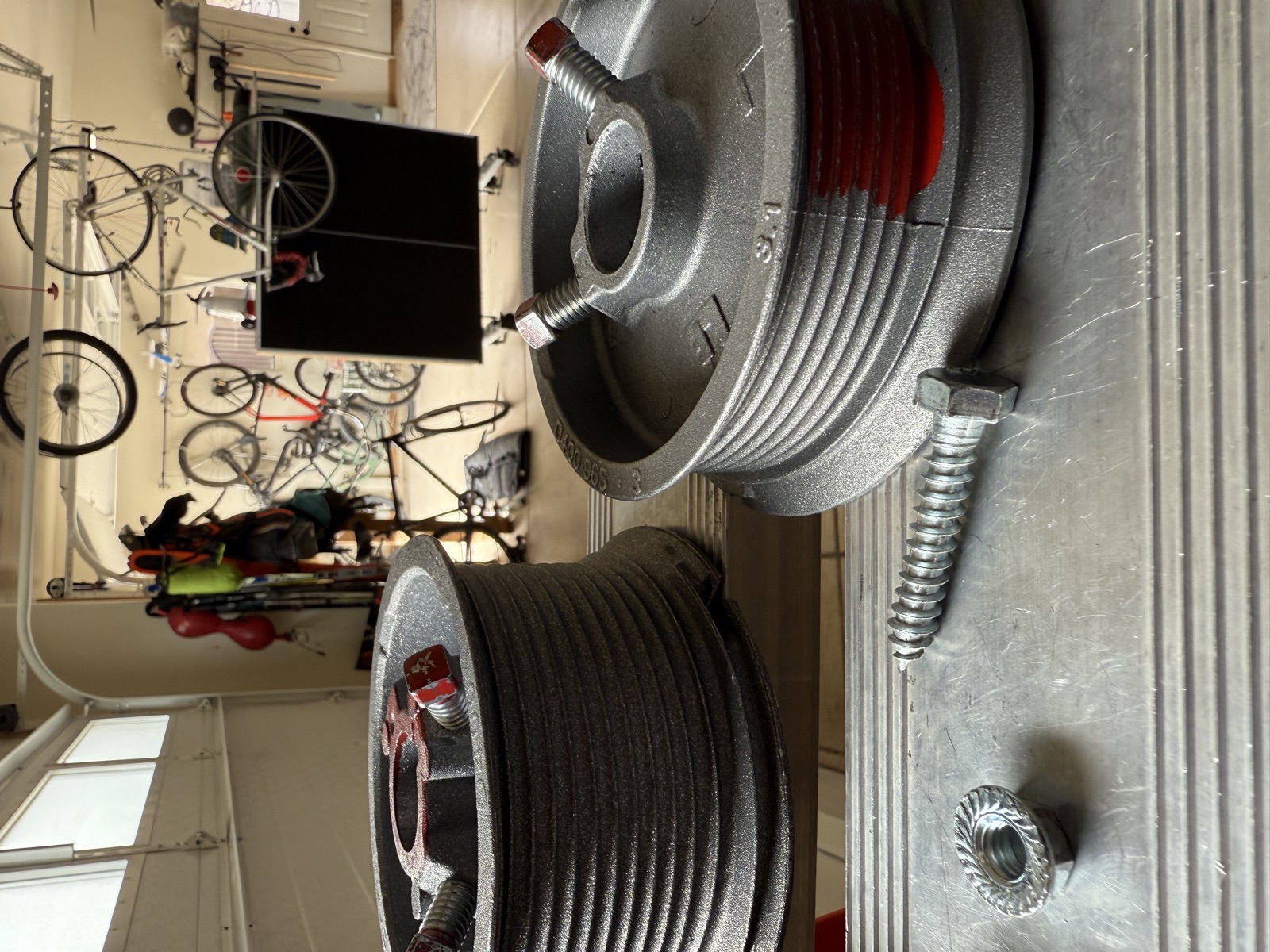
Your garage door opener is the newest thing hanging in your garage. Everything above it has been around a lot longer. Springs, cables, drums, a shaft and a counterweight doing the actual lifting — that's a machine people were building out of gears and pulleys long before anybody plugged one in. The opener came along at the end to push the button for you.
It's also the only part up there with a light on it, a motor you can hear, and a blink code.
So it gets the blame.
A good share of the calls that start with "I think I need a new opener" end with the opener staying right where it is. It wasn't broken. It was the part that noticed first, and it's been trying to tell you something about the rest of the door.
Nobody's calendar has a line on it that says look at the garage door. That's most of what the Golden Key Klub is for and we'll come back to it. First, what your opener is actually saying.
It throws a force error, or it stops partway and gives up
An opener measures how hard it's working on every cycle, and it'll quit on itself when that number climbs past where it belongs. That's the opener protecting your door and whatever is standing underneath it.
A balanced door takes almost nothing to move. Put your hands on a disconnected one and it comes up like a kitchen cabinet. When the springs stop carrying the weight the opener starts carrying it instead, and the force it needs climbs week over week until the limit stops it.
Turning that force setting up makes the symptom go away for a while. It also turns off the one thing watching for a door that has gotten heavy. Then the arm, the top section or the opener itself pays for it.
Springs are the one part of a garage door to leave alone. Oil them, never adjust them.
The red release cord keeps popping back to disengaged
The door starts down, the motor keeps running, and the trolley lets go. Usually that trolley is just worn out and won't latch anymore, which is a small part and a short visit. Sometimes the door bound up on the way down and knocked it loose, and the trolley is only the thing that showed.
Either way, run the balance check at the bottom of this before anybody sells you an opener.
The arm tore off the top of the door
Openers don't rip themselves off doors that move freely. That one is a door that stuck, an opener that kept pulling, and a top section that was never braced to take it. The fix is a strut across the top, a bracket bolted through instead of screwed on, and finding out what the door was hanging up on in the first place. Skip that last part and you'll be doing this again.
A spring broke and the door still goes up
It does. That's the problem.
Your opener is lifting a door that's lost a big piece of its counterweight, and it'll keep doing that until the gear strips or a cable lets go mid-travel. Stop running it. Park outside, pull the release with the door closed, and call somebody. If there are two springs up there, both of them go back on together — the other one has the same cycles on it and is next, and a matched pair lifts the door level.
When it really is the opener
Sometimes the opener is exactly what it looks like. Three that usually are.
It opens by itself at random and never closes by itself. This one rattles people, and it should. An open garage at two in the morning is an open house. It's almost never a ghost and it's almost never the neighbors. A stuck button is one long press, so the receiver toggles the door once and then ignores it — and on the way down the photo eyes veto a stray close if anything is in the beam. Open, and no matching close. Start with a button that's stuck down somewhere: a remote under a seat, a visor clip in a truck parked out front, an old remote in a kitchen drawer with something sitting on it. Then the wall button, where a staple through the wire or a pinched run can short the two terminals and look exactly like a hand pressing it. Then the board. Erase the remotes and pair them back one at a time. That's free, and it ends most of these.
It stops halfway with the door disconnected. Disconnect the door, run the opener empty, and watch it. If the trolley still stalls at the same spot with nothing hanging on it, the door is cleared and the opener is your answer. A rail joint out of line, a worn trolley, a stripped gear or a tired travel sensor all look the same from the floor. Count the blinks on the light and listen to the motor where it stalls — it's either straining or spinning free, and those are two different repairs.
The chain came off and the drive gear came with it. That's a gear and sprocket kit on a unit that still has real safety sensors and some years left in it, or it's a good reason to put the money toward a new one if it's ancient. Either way, get the door weighed first. A gear that chewed itself up was usually pulling more than its share.
One more, and it's the short one
Don't bypass the photo eyes. Not for a week, not for a weekend. Splice a cut wire properly, striped to striped, clean copper seated in the terminals. And if you need the door shut tonight, hold the wall button down until it's all the way down and let go after. Those two eyes are the last thing standing between a moving door and whatever wandered under it.
Sixty seconds tonight
Two checks. Both free, neither one needs a tool.
Find the stuck button. Walk the house and the driveway and put your hands on every remote and keypad you own, including the ones that aren't on a visor anymore. A remote with a coat on top of it is the most common reason a garage door opens itself, and it's the one nobody goes looking for.
Then check the balance. But read this first. Before you touch the red release cord, look up at the spring above the door. If you can see a gap anywhere in the coil, or the door already feels heavier than it should, stop right there and leave it connected — a door with a broken spring drops its full weight the second the opener lets go, and that is the one part of the door that hurts people. If the spring looks whole: door all the way down, nobody underneath, pull the red cord and lift it by hand to about waist height with your hands flat on a panel face and away from the seams. Keep a hand on it and ease off. A balanced door stays roughly where you put it. If it slides down or pulls itself up, the springs have stopped carrying the door and your opener has been covering for them. Set it down gently, hook the cord back on, leave the springs alone, and get eyes on it while the weather is still easy.
Who keeps the count for you
A Kraftsman runs a Door Score on every Kooler visit before a tool comes out of the truck. Cycle count, the springs and cables read under tension, every roller spun by hand, the track checked for square, and the force settings and safety reverse tested instead of assumed. Red, yellow or green on every line, and you get walked through all of it. It's free, and whatever number comes after it comes off what he actually found.
The Golden Key Klub is the version where you stop having to remember any of this. It's $188 a year, one payment. Your tune-up gets scheduled off our calendar instead of yours, you get member pricing, there are no trip or diagnostic fees, a Kraftsman lays eyes on the door and leaves a fresh K Kap on it every visit, and when something does go wrong you move to the front of the line. Members get a number they can text: for service, for a straight answer, or for a genuinely bad door joke.
One percent of every dollar Kooler makes goes to the Kooler Kinetics Fund, to keep kids in this valley moving. So your door getting looked after also keeps a kid on a bike.
If your opener has been doing one of these, tell us what it did and how long it's been doing it. That's usually enough for a Kraftsman to know what he's walking into. Call or text 970-816-6052. We're across the Grand Valley and Montrose.
Your opener has been talking for a while now. What's it been saying?
We Got You.