
What a Garage Door Cycle Is, and Why the Count Matters
By the Kooler Kraftsmen
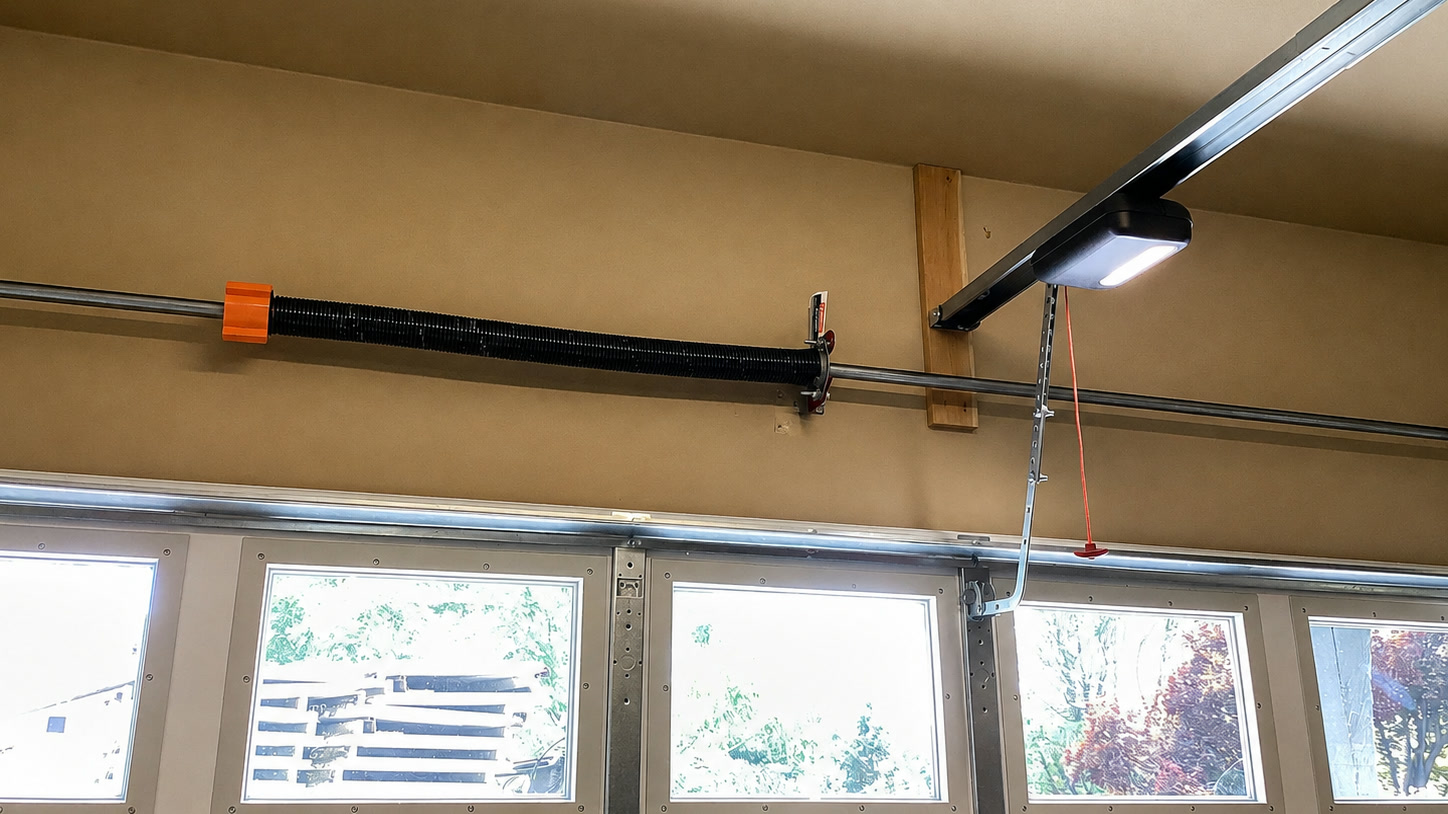
Your garage door is the heaviest thing in your house that moves, and it is the only one that keeps a rhythm.
Up and down. Morning, lunch, evening, one more time because somebody forgot something. It is the first thing that greets your family and the last thing that closes behind them, and it is doing that on a count almost nobody in the house has ever thought about.
Here is the part that surprises people in driveways all over the Grand Valley: a garage door does not wear out by the year. It wears out by the count. Its whole life is measured in beats.
Most people never keep that count. That is fair. You have a life, and a door is supposed to just work. Keeping the count is most of what the Golden Key Klub is for, and we will come back to it at the end. First, the number itself, because it is the single most useful thing you can know about your door.
What a cycle actually is
One beat is one cycle. Up and back down. That is the whole definition.
The springs above your door are what carry the weight. Not the opener, the springs. They are wound steel, and steel has a memory. Every time it loads and unloads, it gives up a little of what it had. It does not care whether that happened over ten years or over three.
The industry puts a number on it. The standard spring you will find on most doors is rated for about ten thousand cycles.
Ten thousand beats. Then it is done, and it usually announces that all at once, on a morning when you have somewhere to be.
Worth saying plainly, because it is the most common misunderstanding we run into: your opener is not what lifts the door. A quarter-horse motor is not picking up two hundred pounds of steel. The springs do that, and the opener is really just guiding a balanced load up and down its track. When the springs fall behind the count, the opener starts doing work it was never built for, and that is how one worn part quietly turns into two.
Nobody hands you that number at the closing table. So here is how to figure out where your own house sits.
Count your own house
This is where two identical doors on the same street live completely different lives.
Picture a normal weekday. Out to work, back at lunch, out again, home for dinner. Call it four runs a day. That is roughly fourteen hundred beats a year, and a standard spring gets you somewhere around seven years.
Now put a teenager in that house. Add a second car. Add the dog getting let out, the trash going down, the bikes coming out, the third trip because somebody forgot something. Eight or ten runs a day is not hard use. It is just a family. That is three thousand beats a year, and the same spring is finished in three.
Same door. Same install. Same Kraftsman. Half the life.
That is the honest answer to the thing we hear on driveways every week: my neighbor's door has gone fifteen years and mine broke in four, so somebody sold me a bad door. Usually nobody did. Your door just beat faster.
It runs the other direction too. The door on a detached shop or an RV bay might open twice a month, and a set of springs out there can outlive the roof. Age alone is not what gets a door. Use is.
Do the math on your own house tonight. Count the runs on a normal day, multiply by three hundred and sixty five, and then ask how old the springs are. That is your position in the count, and it is close enough to be useful.
Nothing about it is sudden
The word people use is always the same. It just suddenly went.
It did not. It had been counting for years, and it told you before it stopped.
A door's rhythm changes before it fails. The sound picks up a new note: a pop on the way up, a grind at the same spot every time, a bang at the top of the travel. It starts running unevenly, one side leading the other. It gets heavy to lift by hand. A cable starts to look slack down at the bottom bracket.
That is not a door dying quietly. That is a door talking. Noise is friction, and friction is the count catching up with the hardware.
And when a spring does finally go, it rarely goes politely. On a two-spring door the second one is the same age with the same count on it, so replacing one and leaving its twin is a service call you will be making again shortly. That is why a Kraftsman will tell you to do the pair.
The good news is that the talking stage is cheap and the stopping stage is not. A spring set on a Tuesday you chose is a different day than a spring set on a Saturday you did not.
The sixty-second listen
You can do this today and it costs nothing.
Stand in the garage, not in the house, not in the car, and run the door one full cycle. Once up, once down. Listen for rhythm, not volume. A healthy door sounds like the same thing happening twice. A tired one has a new sound in it, always at the same point in the travel.
Then, with the door all the way down and nobody standing under it, pull the red release cord and lift it by hand to about waist height. Keep a hand on it and ease off. A balanced door stays about where you put it. If it wants to drop, or it wants to climb, the springs are no longer carrying that weight. You are, and so is your opener, and the opener will lose that argument eventually.
Set it down gently, leave it down, and pull the cord to reconnect.
Here is the important part. If that test told you something, stop there. Springs are wound steel under real tension and they are the one part of this door nobody should be learning on. Have a Kraftsman set it.
You can buy more beats
Most homeowners do not know this, so we say it out loud on every door we hang.
Spring life is a choice. There are higher-cycle springs, roughly double and better, and the difference at install is small. The difference seven years from now is a Saturday morning where the door works instead of a Saturday morning where it does not.
If you have a house that runs, ask for the higher count. And if nobody offers you that option at all, that tells you something about who you are talking to.
Who keeps the count for you
Nobody joins a membership because they love springs. They join because they do not want to be the person keeping count.
Somebody has to notice the rhythm changed. Somebody has to know it is year six on a door that runs ten times a day. Somebody has to show up before the Saturday morning instead of after it.
That is what the Golden Key Klub is. It is a yearly membership, and it means your tune-up schedules itself, your pricing is members' pricing, there are no trip or diagnostic fees, and a Kraftsman puts eyes and a K Kap safety check on your door every visit. Members also get a number they can text: for service, for a name they trust in their home, or for a genuinely bad door joke.
One percent of every dollar Kooler makes goes to the Kooler Kinetics Fund, to get kids in this valley moving. Your door keeping time also keeps a kid on a bike. We like that math.
The one thing to do this week
Go stand in your garage and run the door once. Listen to it the way you would listen to something you care about.
If the rhythm has changed, tell us what it is doing: the sound, and where in the travel it happens. That is usually enough for a Kraftsman to know what he is walking into. Call or text 970-816-6052. We are across the Grand Valley and Montrose.
And if you would rather have somebody else keeping the count, join the Golden Key Klub.
We Got You.