
Why Is My Garage Door Getting Louder? How to Read the Sounds
By the Kooler Kraftsmen · Companion to Matt's letter
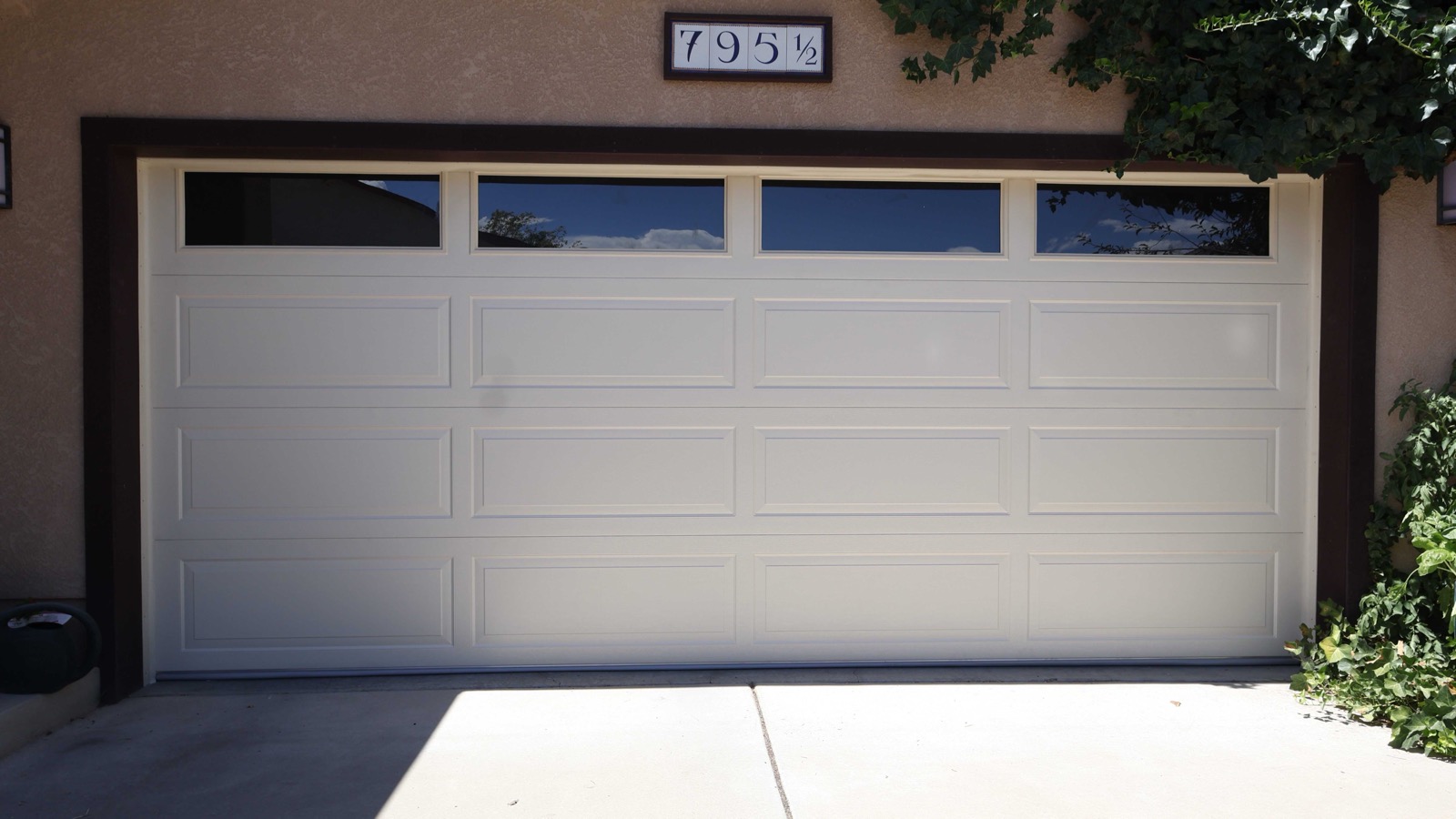
A quiet garage door is not a lucky door. It is a balanced door with good hardware on it.
So when yours starts announcing itself to the whole block, understand what is actually happening: it is not developing a personality. It is handing you a list.
Matt put it plainly in this month's letter: noise is friction, and friction is a wear indicator. Most homeowners file a loud door under "annoying." We file it under diagnosable. There is a real difference between those two words, and the difference is usually a couple hundred dollars now versus a real repair later.
Here is how to read the list your door is handing you. No charge, no appointment needed. You can do the whole thing this afternoon with your own two ears.
And if you would rather not have to listen for it at all, that is exactly what Golden Key is for. Not a discount card. A standing relationship with a crew who already knows your door, so the rumble gets caught in the spring tune-up instead of on the worst morning of your winter. If you want that door kept open year-round, start a conversation with us here.
The two-minute version
Stand inside your garage with the door closed. Run one full cycle, all the way up, all the way down. Do not do anything else. Just listen for two things: where the sound is, and when it happens.
Where tells you which part. When tells you whether it is wear or whether something moved.
That is the whole diagnostic. Four sounds cover most of what we get called out for.
1. A rumble that fills the house
This is the loudest thing on most doors and, happily, the easiest one to fix.
Steel rollers ride in your track on small bearings. Bearings wear. Once they do, the roller stops rolling smoothly and starts grinding its way up the track, and that grind does not stay in the garage. The track is bolted to your framing, and your framing runs straight up into the room above.
That is why a bedroom over the garage is where people finally call us. The sound was never only traveling through the air. It was traveling through the house.
If your rumble is low, constant, and follows the door the whole way up, look at your rollers first. Nylon ball-bearing rollers are the standard fix and they are a same-visit job.
2. A pop or a bang at one spot
Here is the thing to listen for: does it happen at the same height every single time?
If it does, that is hardware, not mystery. A hinge working loose in its holes, or a section flexing where the hardware has given up, makes the same noise in the same place on every cycle. A door that pops randomly is a different conversation. A door that pops at exactly the same point on the track every time is telling you precisely where to look.
Catch that one early. A loose hinge is hardware. A section that has been flexing around a loose hinge for a year is a panel.
3. A slap or a jangle while it runs
That is the chain, and it is not really a chain problem.
Chain slap means your opener is doing more work than it was ever designed to do. Nine times out of ten the door is not balanced, so the motor is dragging weight the springs are supposed to be holding. The opener is not a lifting machine. It is a guidance machine, there to move a door that the springs have already made nearly weightless.
When you hear the chain, you are usually hearing an opener being asked to be something it is not. Openers that get asked that for long enough stop being openers.
4. A squeal or a grind up high
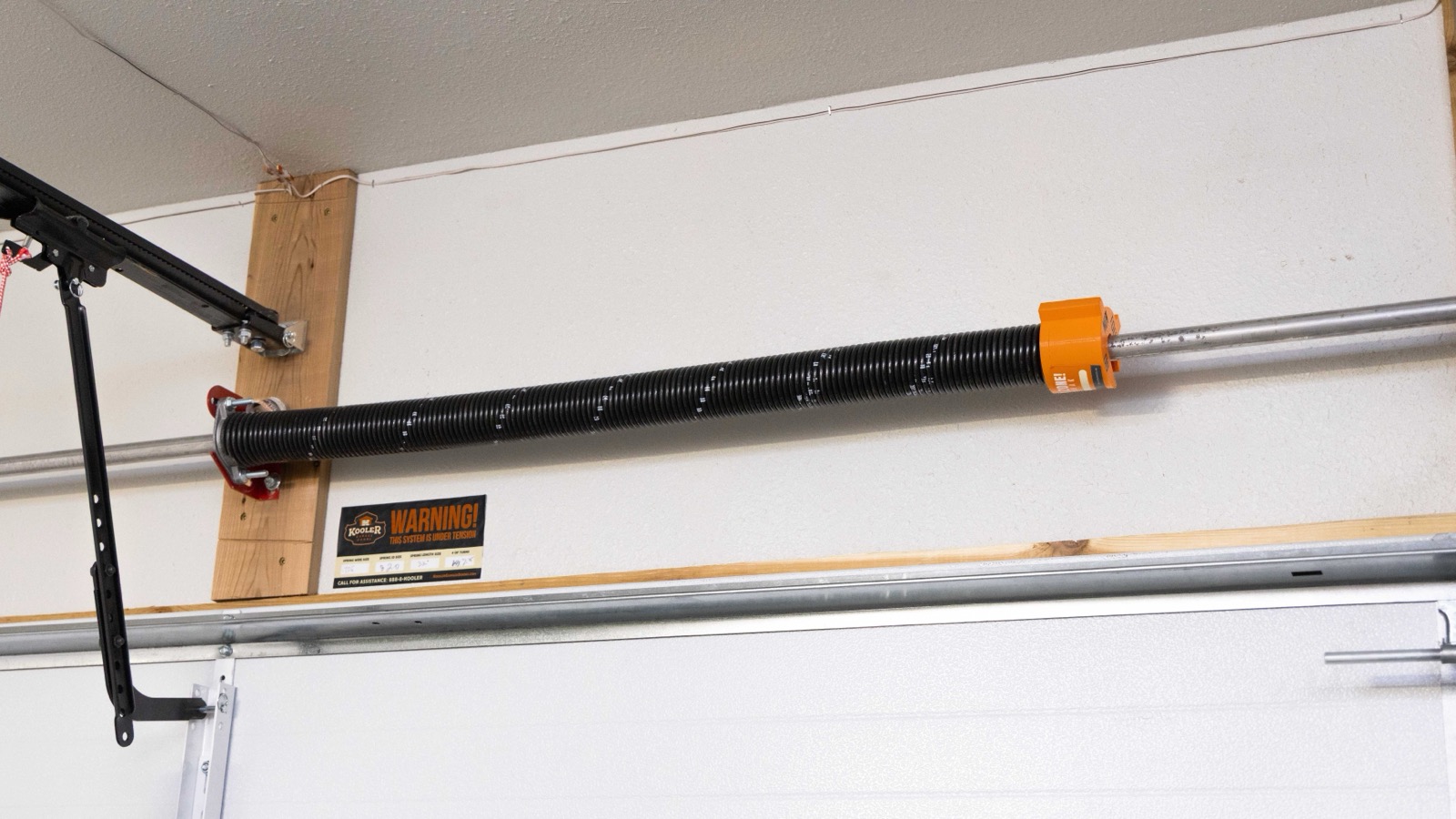
This is the one to stop guessing about.
Up above the door is the spring assembly and the bearing plates the shaft rides in. That spring is under real tension. It is holding the entire weight of your door so you do not have to. It is the one part of your garage that can genuinely hurt somebody, and it is not a homeowner job. Not with a ladder, not with a YouTube video, not on a Saturday.
When the top of the door gets loud, call somebody. That is the whole recommendation.
The orange cap in the photo is our K Kap. It snaps over the adjustable, high-torque end of the spring, bright orange and impossible to miss, so a homeowner glancing up knows exactly which part of the door not to touch. It is a warning, not armor: it does not catch a spring that fails. Think outlet cover, not bulletproof glass. Small piece of hardware, and it exists for exactly the reason you would guess.
The balance test you can actually do yourself
This one is safe, it takes two minutes, and it tells you more than anything else on this page.
- Close the door.
- Pull the release cord, the red handle hanging from the opener rail. That disconnects the door from the motor.
- Lift the door by hand to about waist height.
- Let go.
A balanced door stays right where you left it.
If it slams down, or shoots up, your springs are off. And every bit of that imbalance is landing somewhere: on your opener, on your hinges, on your rollers, on your track. That is what you have been listening to.
Reconnect the opener when you are done. If the door would not budge by hand, or if it dropped hard, leave it closed and call us.
Please do not spray WD-40 on it
This comes up every single time, so we will keep saying it.
WD-40 is a solvent, not a lubricant. It is very good at stripping things. What it strips out of your door is whatever good grease was still in there doing its job. The door goes quiet for about a week, and then it comes back louder than it started, with less protection than it had before you helped.
If you want to do something between visits, ask us what to use. It is a short answer and we are happy to give it.
Why we put a number on it
Nobody should have to take our word for how much quieter their door got.
So we take a decibel reading before we touch the door, and another one after. That is it. That is the whole accountability mechanism.
Here is why it matters more than it sounds like it should: the decibel scale is logarithmic. A 10 dB drop is not 10% quieter. It is perceived as roughly half as loud. A properly balanced door with the right hardware comes down 3 to 10+ dB.
That is not an improvement you have to squint to notice. That is a different door. You hear the difference from the kitchen.
What we actually change
Two things, mostly.
We balance the door, because a balanced door is the foundation, and no hardware in the world fixes a door the springs are not holding.
And we put composite wear surfaces where steel was grinding on steel. That is what the Stealth hinges and hardware are: the contact points that used to be metal-on-metal become something that does not fight back. It cuts noise, vibration, and friction at the source rather than covering them up.
This month we are running discounts on Stealth hinges and hardware. If your door has been getting louder over the last year, this is the month to deal with it.
The part that is not about noise
Quieter is the part you notice. It is not the part that saves you money.
Less friction means less wear on the parts that cost real money to replace. Every one of those four sounds is a part working harder than it was built to work. Rollers grinding wear tracks. An unbalanced door wears out openers. A loose hinge eventually takes a section with it.
The sound is the early warning. It is the cheapest information your house will ever give you, and it arrives months before the invoice does.
Staying ahead of it
The Golden Key Klub is how our members stop thinking about this entirely.
It is $188 a year. One flat annual membership. It covers priority scheduling, your annual Kooler Kare tune-up, no trip or diagnostic fee, members-only repair pricing, a K Kap safety check, front-of-line emergency response, and a live members concierge who already knows your door. Every year you stay, there is a signing gift on top of it: a surge protector for your opener in Year 1, then a $50 Kooler Credit in Year 2 and every year after, good on anything at Kooler, yours to spend any time you are a member and building for as long as your membership stays active.
It is not a discount card. It is the connection kept open, a standing relationship with a crew that already knows your door, so the small stuff gets caught while it is still small.
That is the whole idea behind Kooler.
If your door got loud
Run one cycle. Listen for where and when. Do the balance test.
Then call or text us and tell us what you heard. That alone puts a Kraftsman ahead of the problem before he is in your driveway. We are at 970-816-6052, and we are here for repair across the Grand Valley and Montrose.
We Got You. Friends and neighbors first. Garage doors second.