
Garage Door Spring Replacement on the Western Slope
When a spring breaks, the door won't lift. We replace both springs (always both), test the system, and put a free K Kap on every spring before we leave.
Torsion springs do the actual lifting. The opener just guides the door along for the ride. So when a spring lets go, the door slumps, the opener strains against weight it was never meant to carry, and you're parked in or parked out.
Kooler replaces both springs every time, because they wore at the same rate and the one that didn't break today is breaking soon. We size the spring to your door's real weight, re-balance the system mid-travel, and load-test it before we leave.
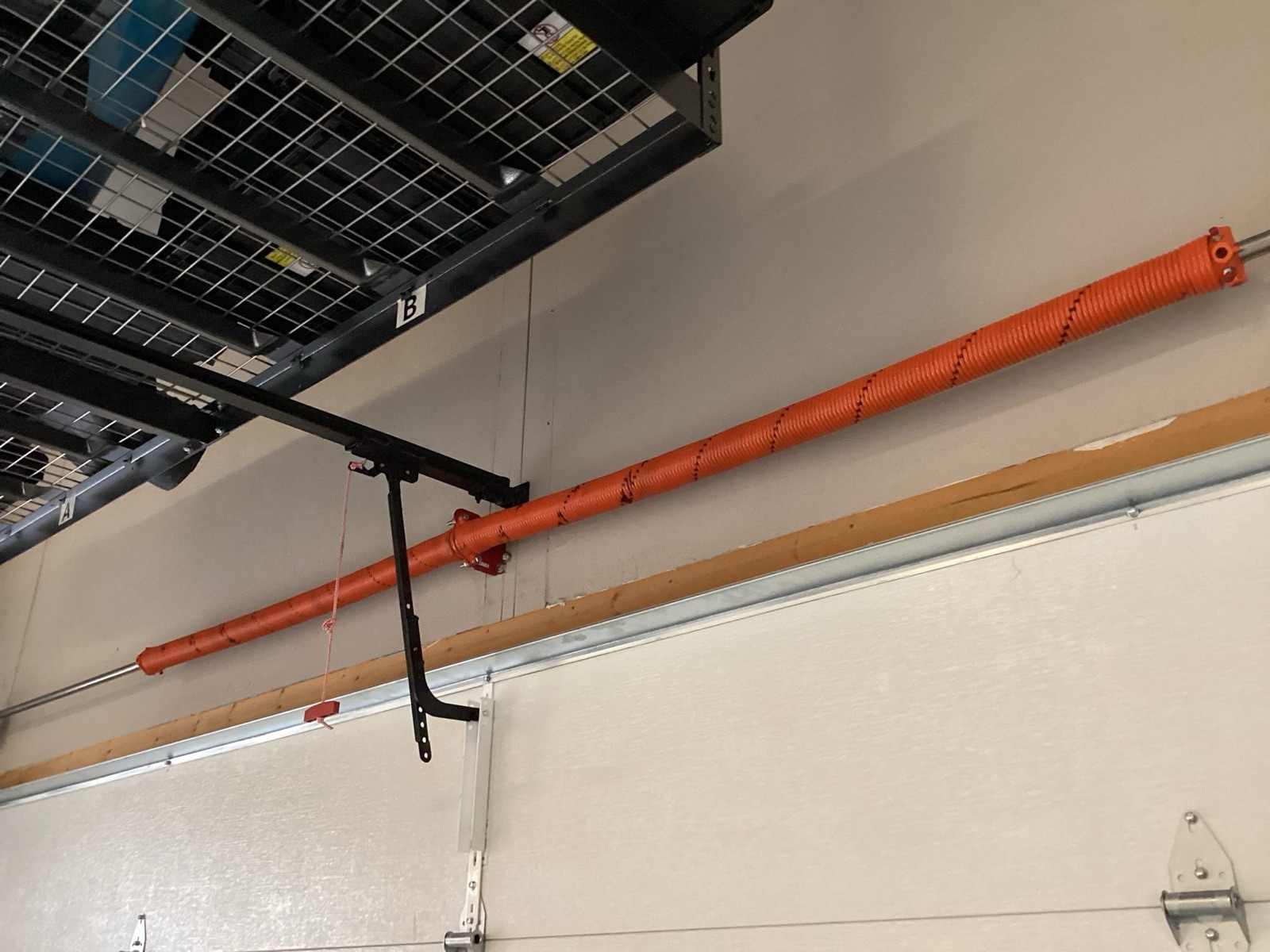
And on the way out, every spring gets a free K Kap, our patent pending plastic safety/warning cap over the high-torque winding-cone end. Like an outlet cover, for the spring. Since 2015. Local and family owned.
Every visit, the standard.
- → Both torsion springs replaced: sized to your door weight
- → Cone and bearing inspection
- → Cable inspection (replace if compromised)
- → Door balance test mid-travel
- → Free K Kap on every spring: patent pending plastic safety/warning cap, Kooler-only
- → Kraftsman's Guarantee, never expires
The Kooler standard, broken down.
Always both. Same wear.
Both springs lift the same door the same cycles for the same years. The one that didn't break today is breaking soon. Replacing one is a callback waiting to happen. We replace both, every time.
Size to your door.
Spring spec depends on door weight, height, and lift type. Wrong spec means the door fights the opener for the next ten years. We weigh the door, calculate the cycle rating, and install the right one.
K Kap on every spring. Free.
Torsion springs store 250-400 foot-pounds of energy at the adjustable winding-cone end. That is where 20,000-30,000 garage-door injuries a year start: homeowners reaching into a high-torque part of the system they did not know was dangerous. The K Kap is our patent pending plastic safety/warning cap. Like an outlet cover, for the spring. It snaps over that exact end so the eye sees the warning before the hand finds the hazard. Free on every spring. Kooler-only.
From book to done in three steps.
- 1
Book online or call.
Pick a time at koolergaragedoors.com or call 970-816-6052. Most jobs get a window within 24 hours.
- 2
A Kraftsman walks the job with you.
Door Score on-site. Good / Better / Best options. You see the price before any wrench moves.
- 3
We finish what we quote.
Most repairs and seal jobs land in one visit. New door, custom, or opener: scheduled, tracked, walked through with you.
Things homeowners ask about this service.
How much does a spring replacement cost?
+
Why both springs?
+
What's the K Kap?
+
How long does the swap take?
+
Book Spring Replacement Today
Pick a time that works. We confirm in minutes and your Kraftsman calls ahead before he heads your way.
The booking window opens on top of this page. Pick a slot and you're set.